For users, the starting point is the legal entity on the FSA register, not the global brand or app. For operators, the decisive issues are whether the activity is a crypto-asset exchange service, which customer assets are controlled, how tokens are admitted, and whether derivatives, advisory, or securities activity needs another permission.

Key takeaways
- Japan had 27 registered crypto-asset exchange service providers, but registration does not prove that every token, feature, or affiliate is covered.
- Current controls include asset segregation, cold-wallet safeguards, token review, customer disclosures, AML checks, and Travel Rule data for covered transfers.
- The 2026 FIEA amendment is enacted, yet its disclosure, lending, market-abuse, and enforcement provisions should be reported with their individual commencement status.
Japan’s current rules begin with CAESP registration
A business needs crypto-asset exchange service provider registration when it buys, sells, or exchanges crypto-assets; intermediates those transactions; controls related customer money; or manages crypto-assets for another person. The FSA’s FinTech entry guidance applies this test to the activity, not the marketing label.
An overseas platform does not avoid the perimeter because its company and servers sit outside Japan. If it serves Japanese residents, the operator must test local registration before onboarding. Singapore’s restrictions on unlicensed overseas crypto services illustrate the same principle: an offshore group structure does not erase a local customer perimeter.
| Activity or applicant test | Current regulatory consequence | Evidence to verify |
|---|---|---|
| Buy, sell, or exchange crypto-assets | CAESP registration under the Payment Services Act | Contracting entity and FSA registration number |
| Broker, intermediate, or act as agent | Registration can apply even without operating the matching venue | Order flow, customer agreement, and fee recipient |
| Control money linked to a crypto trade | Customer-money safeguarding obligations attach | Trust account, reconciliation, and withdrawal controller |
| Control crypto-assets for another person | Custody can itself enter CAESP scope | Key control, transfer authority, and wallet records |
| Offer derivatives or security tokens | FIEA permissions may apply in addition to CAESP status | Product terms, instrument classification, and licensed entity |
| Apply as a new operator | A Japanese stock company, or a qualifying foreign operator with a Japan office and representative, is generally required | Corporate form, local office, governance, and responsible staff |
The financial entry threshold is also concrete. A CAESP applicant generally needs at least JPY10 million in capital and positive net assets, supported by governance, security, AML, complaint-handling, outsourcing, and business-continuity evidence. These are entry conditions, not proof that the platform offers the best execution or customer service.
Registered exchanges show the current market perimeter
Japan’s official register listed 27 CAESPs on 21 August 2026. The table below compares five recognisable operators using registration data and the number of asset codes shown in that same FSA snapshot. Asset count describes product breadth only; it is not a safety score, liquidity ranking, or endorsement.
| Registered operator | FSA registration | Registration date | Asset codes in FSA list |
|---|---|---|---|
| bitbank, inc. | Kanto No.00004 | 29 September 2017 | 44 |
| GMO Coin, Inc. | Kanto No.00006 | 29 September 2017 | 24 |
| SBI VC Trade Co., Ltd. | Kanto No.00011 | 1 December 2017 | 37 |
| Coincheck, Inc. | Kanto No.00014 | 11 January 2019 | 37 |
| Binance Japan Inc. | Kanto No.00031 | 14 October 2022 | 66 |
The FSA register of crypto-asset exchange service providers identifies the supervised legal entity, registration number, date, office, and declared assets. It expressly does not guarantee an asset’s value, and a provider’s live offering may differ from the dated list.
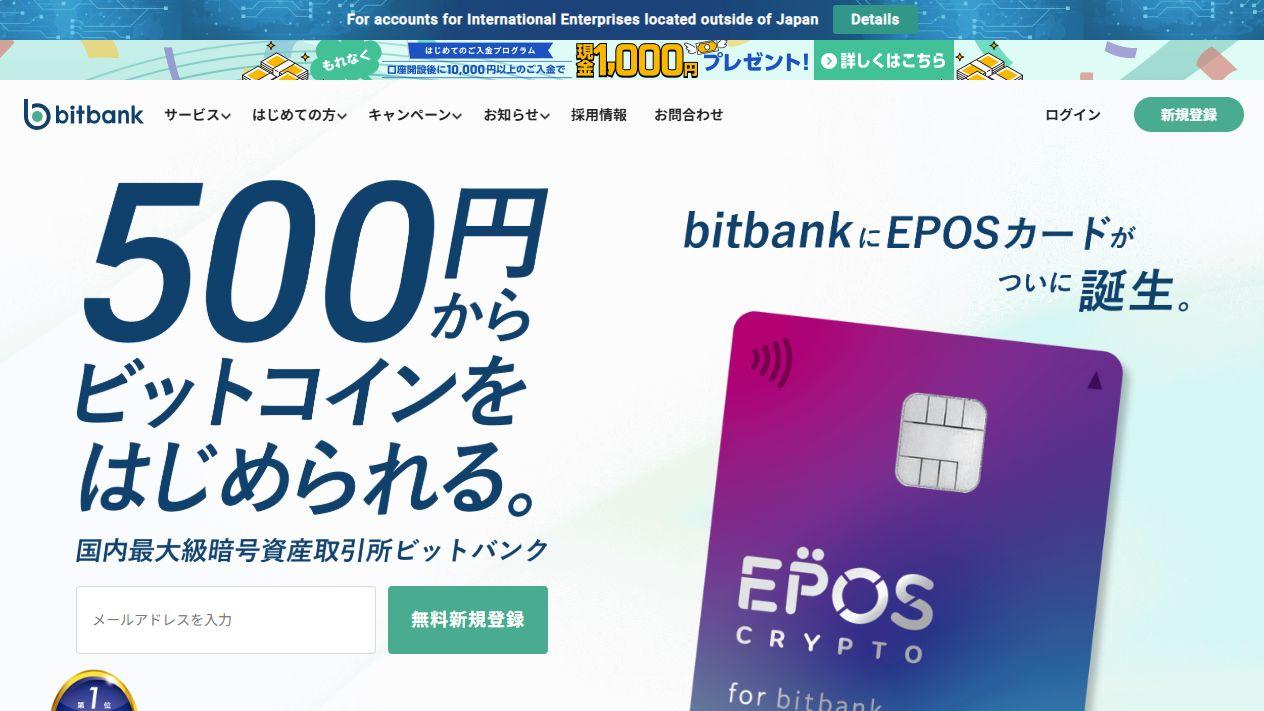
The bitbank page illustrates why entity and product checks must follow the register. Its public service includes spot exchange, dealer, margin, lending, staking, and yen-withdrawal features, but each feature has its own terms and risk. The registration row alone cannot establish fees, executable liquidity, availability, or the protection applied to every feature.
Binance Japan has the broadest declared asset list among these five, while GMO Coin has the narrowest. That difference can matter to a user seeking a specific token, yet a useful comparison must also test spreads, withdrawal networks, yen rails, incidents, and whether the account is actually contracted with the Japanese entity.
Custody and the Travel Rule remain active controls
Customer-asset protection is already operational under the current framework. Providers must segregate customer money and crypto-assets, reconcile holdings, and subject segregation to audit. FSA custody material describes cold storage as the default and limits operational hot-wallet exposure, with an equivalent quantity held separately to cover customer assets kept online.
These safeguards reduce commingling and online-key exposure, but they do not make an exchange failure-proof. Readers should identify the wallet controller, percentage held offline, compensation arrangement, audit period, withdrawal approval process, and legal entity responsible for returning assets after an incident.
Japan’s Travel Rule also changes the withdrawal workflow. From 3 August 2026, an updated designation added five jurisdictions to the foreign-transfer scope where equivalent rules operate. Covered CAESPs and electronic-payment-instrument providers must transmit originator and beneficiary information so transfers can be traced through the sending and receiving providers.
The FSA’s finalized Travel Rule update does not mean every self-hosted-wallet transfer is prohibited. It means the user should check the receiving provider, jurisdiction, required beneficiary data, network support, and rejection or return procedure before sending a material amount.
JVCEA connects token admission to market integrity
The Japan Virtual and Crypto assets Exchange Association is the approved self-regulatory organization for registered exchange providers. Its rules supplement statutory supervision through member standards for advertising, token handling, trading, custody, security, and customer protection. Membership therefore creates an operating rulebook, not a private substitute for FSA registration.
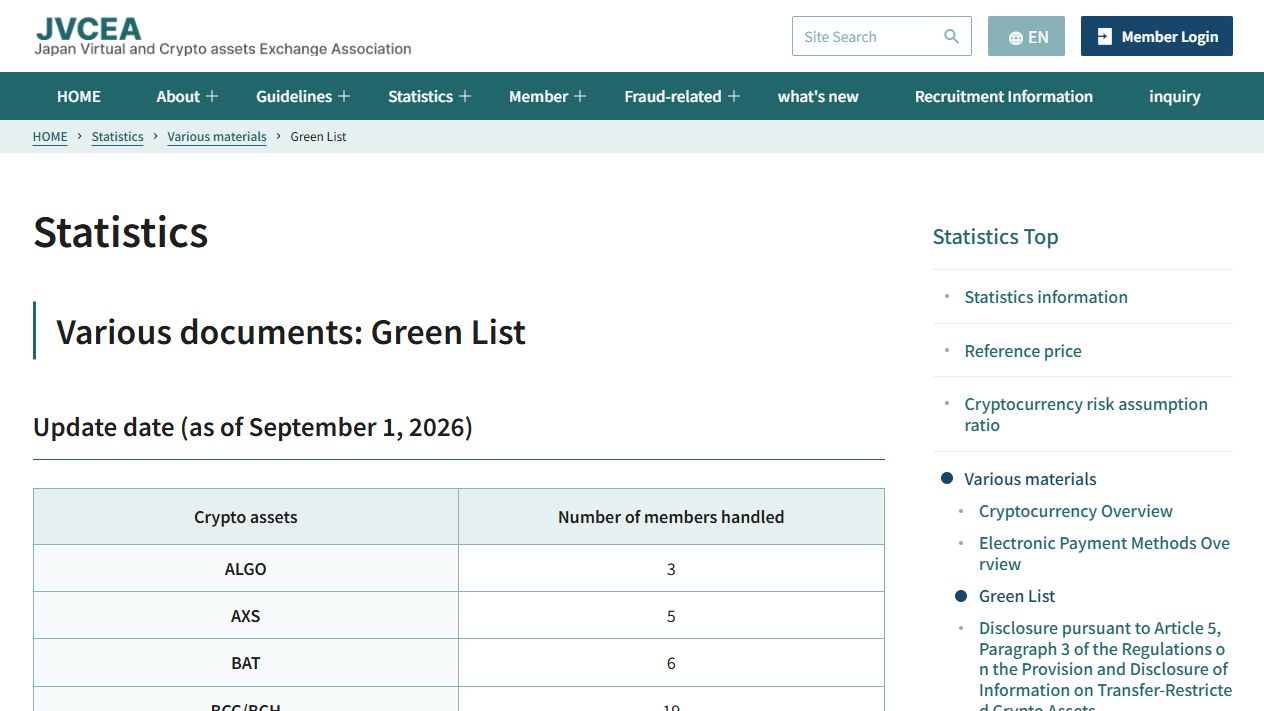
The Green List identifies assets widely handled in Japan. As of 1 September 2026, inclusion required handling by at least three member companies, at least six months of handling by one company, no association-imposed handling condition, and no other reason making inclusion inappropriate. BTC appeared at 29 members and ETH at 28.
Green List status can streamline a member’s review, but it is not automatic approval for every exchange or a finding that the asset is low risk. The operator still needs governance, disclosures, technical controls, conflict review, and continuing monitoring. A new or restricted asset follows the association’s more detailed admission process.
Market integrity begins before the first customer trade. The operator must assess issuer and protocol information, supply and governance, code and security risks, liquidity, conflicts, and disclosure quality. After admission, surveillance should connect unusual orders, wash trading, manipulation signals, insider information, escalation, and retention of evidence.
The 2026 FIEA amendment expands disclosure and enforcement
Japan’s reform is no longer only a working-group proposal. The FSA’s Diet legislation record states that the amendment submitted on 10 April 2026 was enacted on 15 July 2026. This advances TheCCPress’s earlier report that Japan planned to classify crypto as financial products. Commencement rules still determine when each obligation operates.
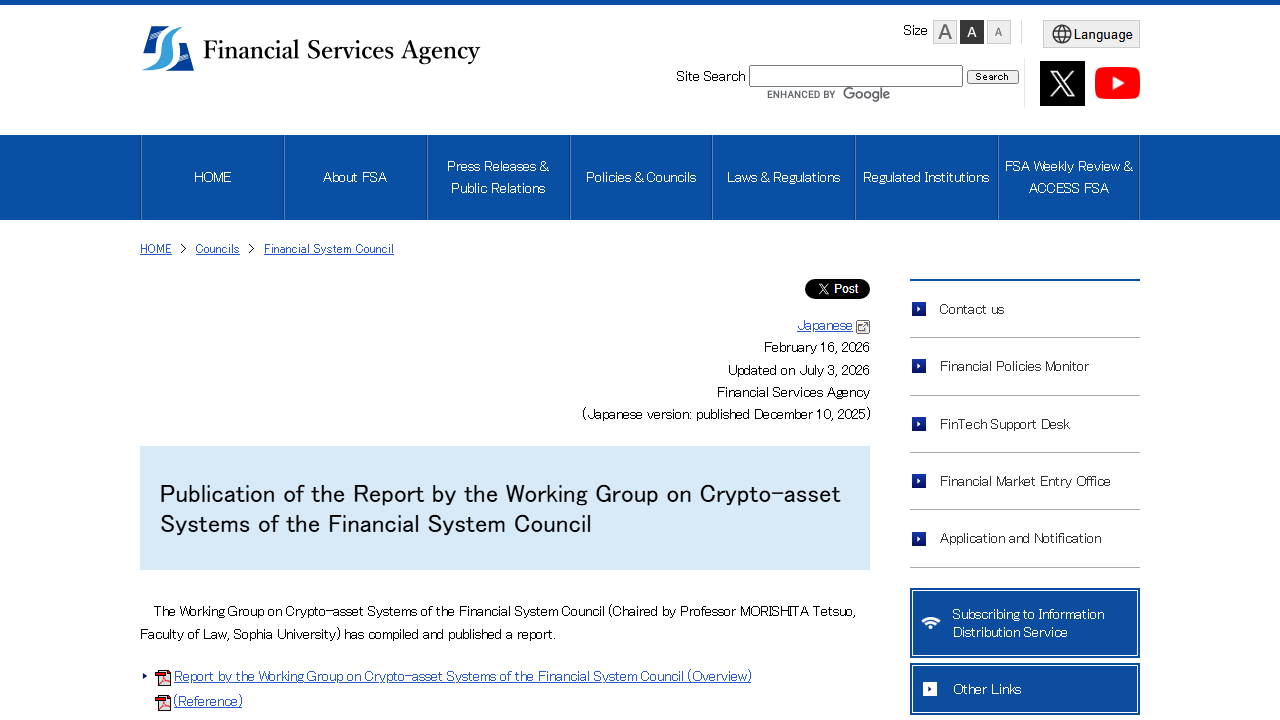
The enacted framework moves investment-focused crypto regulation toward the FIEA while preserving a category distinct from securities. It introduces a specified-crypto-asset disclosure regime intended to address weak white papers, code discrepancies, governance, supply, and other information needed for an investment decision.
The operating perimeter also reaches crypto lending and certain investment-management or advisory activity. Exchange businesses face additional financial and control requirements, including contingency reserves, net-capital monitoring, side-business controls, and oversight of critical system providers. The responsible entity must therefore map outsourced infrastructure as carefully as customer-facing trading.
Market-abuse provisions address insider trading and stealth marketing alongside existing manipulation concerns. Administrative monetary penalties, stronger criminal consequences, Securities and Exchange Surveillance Commission investigation powers, and emergency-injunction tools give the framework a clearer enforcement path than a voluntary disclosure code.
Most provisions are expected to commence within the statutory implementation period rather than on the enactment date itself, while some enforcement provisions may begin earlier. An article published during that transition should name the provision, source, and effective date instead of saying that the whole FIEA package is already live.
Tax and ETF treatment follow separate conditions
The 2026 market-law amendment does not automatically deliver a flat crypto tax rate or approve a spot crypto ETF. Japan’s FY2026 tax direction contemplates separate taxation for specified crypto transactions after the relevant FIEA changes take effect, but eligibility, commencement, and implementing definitions still control the result.
The often-cited contrast is comprehensive taxation that can reach a 55% top marginal rate versus treatment closer to the roughly 20% securities regime. Those headline rates do not determine one person’s liability. Residency, transaction type, losses, business status, and the enacted tax provisions must still be checked.
Crypto ETFs follow the same evidence discipline. A policy path toward regulated investment products does not equal approval of a named fund, exchange listing, or retail distribution. The product’s filing, approval, custody, index, and sales permissions must be verified separately from the general reform.
Verification starts with the legal entity and product
- A Japan exchange review should begin with the contracting name, FSA number, account terms, and product used. The reviewer should then record asset support, order type, spread, withdrawal network, yen funding route, custody disclosures, incident history, and the date on which each field was checked.
- Registration is an eligibility gate, not the final ranking. Execution quality can be tested by comparing executable prices for the same order size, while operational quality requires a small deposit, trade, crypto withdrawal, and yen withdrawal. The test should preserve fees, timestamps, error messages, and the entity controlling each approval.
- Yen-rail reliability is especially separate from FSA status. In a JapanFinance discussion about cashing out crypto reviewed on 20 August 2026, a bitFlyer user described JPY withdrawals as easy. Another participant described transferring to a Japanese exchange, selling, withdrawing to a bank, and retaining acquisition records.
- Those reports show that specific users completed or understood that route; they do not prove current fees, universal bank acceptance, custody quality, or tax treatment. The exchange controls its withdrawal review, the receiving bank controls final acceptance, and the user controls whether acquisition and transfer records are complete.
- The reader test is a dated low-value round trip through the Japanese entity intended for normal use. Record the quoted and executed price, total fee, processing time, requested beneficiary details, bank receipt, and manual review. A platform that cannot complete that route should not rank highly for yen access regardless of asset count.
- Institutional users need a second perimeter test for derivatives, tokenised securities, advisory, lending, and custody. A CAESP registration does not authorize every FIEA product, just as an intermediary approval does not make the intermediary the trading venue. TheCCPress’s Hong Kong virtual-asset licensing analysis shows why those roles must remain separate.
Conclusion
Japan crypto regulation in 2026 starts with CAESP registration, segregated assets, custody, token admission, disclosure, AML checks, and transfer data. In the broader 2026 crypto regulator watchlist, the FSA stands out because its register, JVCEA rules, and product evidence connect legal status to what Japanese customers can trade.
The 2026 FIEA amendment adds a more investment-focused disclosure and market-integrity framework, but enactment is not a single effective date for every provision. Users should verify the entity and complete a small operational test; firms should map each activity, asset flow, permission, outsourced system, and commencement rule before entering Japan.
Frequently asked questions
Is every exchange on the FSA register equally safe?
No. Registration confirms a supervised legal entity and baseline obligations, not equal liquidity, cyber resilience, fees, banking access, or incident history. Compare those operational fields separately and use the same dated order size and withdrawal route.
Does the JVCEA Green List guarantee a token?
No. It identifies crypto-assets that satisfy handling-history and association criteria. It does not guarantee value, liquidity, code quality, or continued listing, and each member remains responsible for its admission and monitoring controls.
Is Japan’s 2026 FIEA crypto reform already fully effective?
No. The amendment was enacted on 15 July 2026, but individual provisions depend on commencement and implementation measures. Cite the applicable effective date before treating a disclosure, lending, tax, ETF, or enforcement change as an operating rule.
Disclaimer: This article is for informational purposes only and does not constitute financial or investment advice. Cryptocurrency and digital asset markets carry significant risk. Always do your own research before making decisions.